Business Process Reengineering in ERP: Simplify and Automate Workflows

ScaleLabs helps ops-heavy B2B teams ship client portals and workflow automation that reduce email chaos, speed up onboarding, and improve visibility across the business.

Business Process Reengineering (BPR) means stepping back and completely rethinking how work gets done, not just improving the old steps, but rebuilding them from the ground up.
It’s about eliminating unnecessary tasks, automating repetitive actions, and redesigning workflows to achieve massive performance improvements in cost, speed, quality, and efficiency. Traditionally, companies relied on incremental improvements, adding tools or changing a few steps. But BPR is different. It questions the foundation:
“If we had to build this process today, with the technology available now, how would we do it?”
That question is driving change across industries.
For example:
- Manufacturers are replacing manual inventory logs with real-time ERP dashboards.
- Construction firms are linking field data directly into their project systems.
- Finance teams are cutting down approval times from days to hours through automated workflows.
The goal of BPR isn’t just digital transformation; it’s business simplification. When done right, processes become leaner, faster, and more connected, giving decision-makers accurate insights in seconds instead of hours.
And thanks to tools like ERP platforms, AI-driven integrations, and vendor portals, BPR has become far easier to execute, without disrupting everyday operations.
The Core Principles of BPR
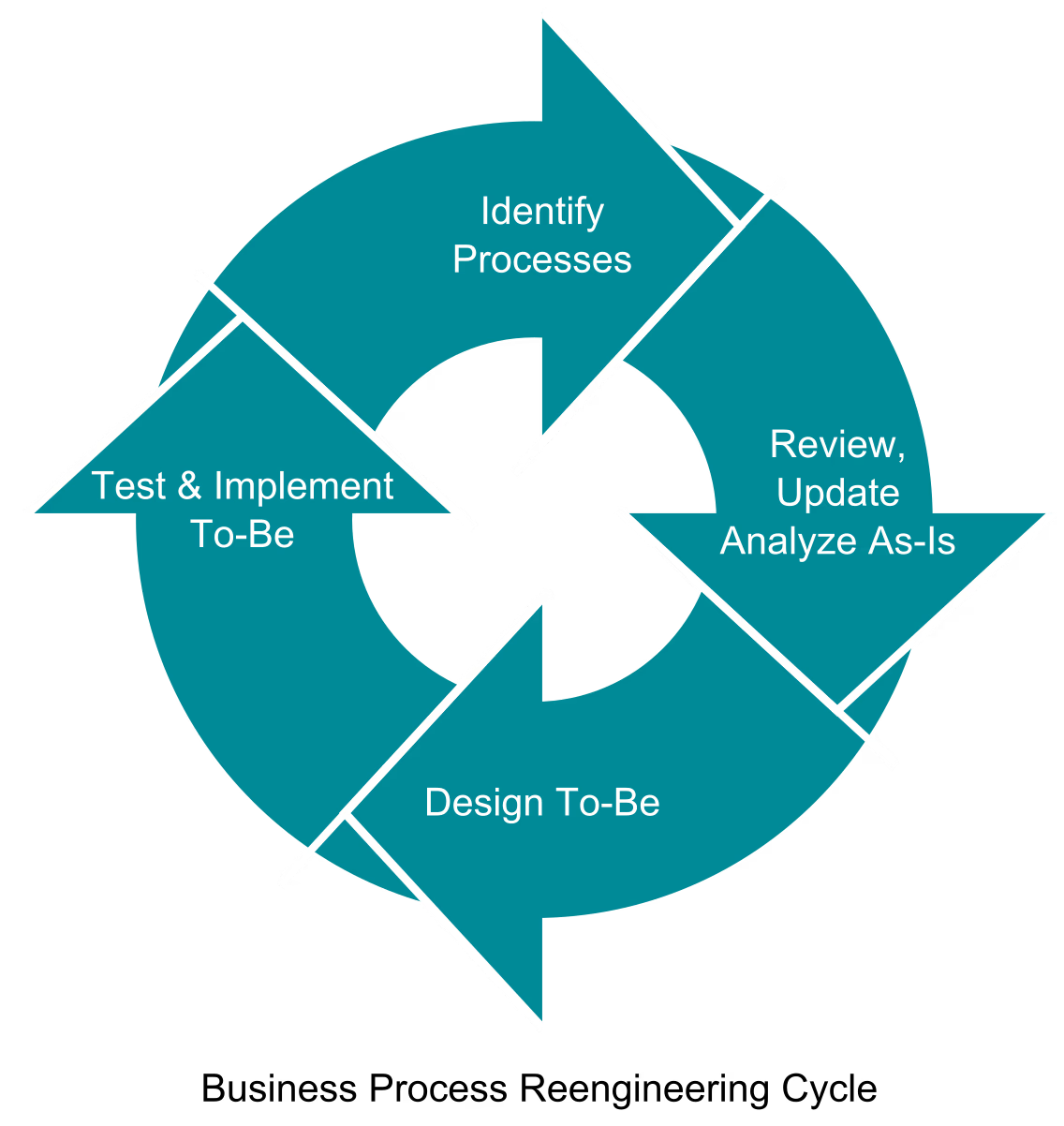
Business Process Reengineering works best when guided by a few core principles, each focused on rethinking instead of just refining.
Here’s what makes a process truly reengineered:
1. Start with the outcome, not the task.
Instead of improving individual steps, begin with the end goal. Ask: What result are we trying to achieve? Then rebuild the process backward from that outcome.
2. Remove handoffs wherever possible.
Every approval chain, form, or waiting period slows things down. Reengineering replaces those manual steps with automation and rule-based workflows that move tasks instantly when criteria are met.
3. Design around the customer.
Whether it’s an external buyer or an internal department, all process redesigns should start from their perspective. The smoother the customer’s journey, the better the business outcome.
4. Use technology as the enabler, not the afterthought.
True BPR isn’t about adding a new tool; it’s about using data, APIs, and integrated systems to eliminate friction between departments. The right ERP or automation layer ties everything together.
5. Make data visible to everyone who needs it.
Reengineering often includes connecting dashboards or custom or shared portals so teams can act on real-time information instead of outdated spreadsheets.
Here’s a quick view of how BPR changes workflows in practice:
In short: BPR removes friction. It replaces scattered workflows with synchronized systems that move as one.
Business Process Reengineering in ERP Systems
If Business Process Reengineering is the strategy, ERP (Enterprise Resource Planning) is the foundation that makes it possible.
Most inefficiencies in a company exist because systems don’t talk to each other, accounting uses one tool, operations another, HR a third, and vendors rely on emails. BPR inside an ERP solves that by connecting every workflow into one platform.
Here’s how it works in practice:
- Automated data flow: Instead of manual handoffs, ERP integrations push data between finance, operations, and inventory in real time.
- Faster approvals: Replacing multi-person email chains with role-based approval workflows.
- Eliminating double entry: Updating data once in ERP automatically updates connected systems (CRM, vendor portal, etc.).
- Audit-ready transparency: Every change, action, or update is logged for visibility and compliance.
For example:
- A construction firm can reengineer project workflows so that field updates, material requests, and vendor approvals all flow through ERP, no spreadsheets required.
- A finance team can link ERP with a vendor portal to auto-match invoices and purchase orders, cutting reconciliation time by 80%.
When BPR meets ERP, businesses shift from being reactive to being proactive. Processes stop being bottlenecks and start becoming competitive advantages. ERP turns business process reengineering from an idea into an executable system.
Business Process Reengineering Examples
The best way to understand Business Process Reengineering (BPR) is to see it in action. Below are three examples of how companies in different industries have reengineered their core workflows to save time, reduce costs, and improve accuracy. 1.
Manufacturing: Automating Purchase Approvals
Before:
Purchase orders were handled manually — a team member filled out a form, sent it by email for manager approval, and waited days for a response. Lost emails and missing signatures delayed production.
After:
The company integrated its procurement process into the ERP system. Purchase requests now move automatically through a predefined approval flow based on value thresholds.
- Approvals are logged instantly.
- Managers get real-time notifications.
- Orders sync directly with inventory and finance.
Impact: Approval time dropped from 3 days to 3 hours, and missed purchase orders became nearly zero. 2.
Construction: Linking Field Work with Project Scheduling
Before:
Project managers constantly called or texted installers to ask for status updates. Field photos were uploaded days late. Customers demanded updates, and the team couldn’t answer in real time.
After:
Using a driver portal integrated with the ERP, field teams now:
- Check in at job sites.
- Upload before-and-after photos.
- Automatically mark stages complete.
- Trigger project timeline updates inside ERP.
Impact: Communication time dropped by 70%, customer visibility improved, and project delays decreased significantly. 3.
Finance: Auto-Matching Invoices with ERP Data
Before:
Accounts payable staff manually compared invoices against purchase orders and receipts. A simple mismatch meant hours of searching and emails between departments.
After:
By reengineering their workflow through ERP automation:
- Invoices now auto-match with PO data and delivery confirmations.
- Exceptions trigger alerts only when necessary.
- Payment cycles close faster with full audit trails.
Impact: Processing time per invoice fell from 20 minutes to under 2 minutes, freeing the finance team to focus on forecasting instead of firefighting.
These examples show that BPR isn’t just a theory; it’s a practical shift from people chasing tasks to systems handling them automatically. The goal isn’t to replace teams, but to give them the clarity and tools they need to work smarter.
How ScaleLabs Helps Companies Reengineer with Automation
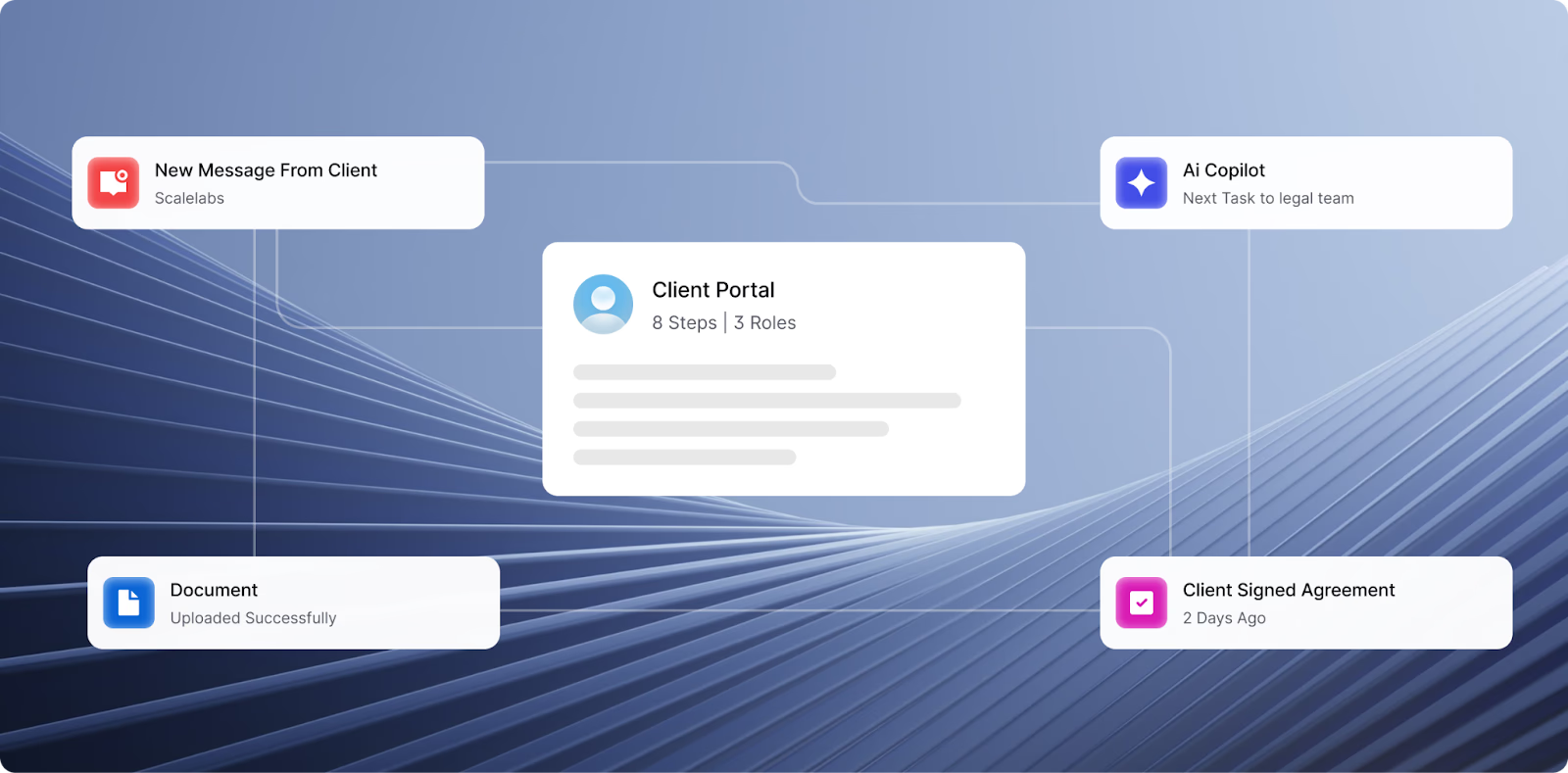
Reengineering a process doesn’t have to mean starting from scratch. Most businesses already have good systems; they’re just disconnected.
That’s where ScaleLabs steps in.
At ScaleLabs, the approach to Business Process Reengineering is grounded in integration-first automation. Instead of selling prebuilt templates, the team studies how your business actually runs and then builds a digital workflow around it.
Here’s how it works:
- Process Mapping
ScaleLabs reviews your existing workflows, from approvals and documentation to communication loops, and identifies bottlenecks that can be automated. - Workflow Redesign
Using ERP and custom portal integrations, each process is simplified into logical, automated steps.- Redundant approvals are removed.
- Repetitive data entry is replaced with synced fields.
- Cross-department visibility is built in from the start.
- Integration Development
The team builds connectors between your systems, ERP, CRM, vendor portals, or field apps, so information flows without friction. - Automation Layer
AI-based triggers handle reminders, approvals, and data updates automatically. Managers are only looped in when human judgment is needed. - Measurement & Optimization
Every reengineered process is tracked through analytics dashboards, showing measurable improvements in turnaround time, workload reduction, and customer response speed.
Why Businesses Choose ScaleLabs
- Custom-fit integrations: Every workflow is unique, so the solution is too.
- Seamless ERP connections: No data duplication, no manual sync.
- Scalable design: Easy to expand as your team or operations grow.
- Transparency first: Built-in reporting and audit-ready records.
In short: ScaleLabs helps turn slow, manual operations into connected, automated workflows, one process at a time.
Frequently Asked Questions
What is Business Process Reengineering in simple terms?
Business Process Reengineering (BPR) means redesigning how work gets done, replacing manual steps with automated, efficient workflows that improve speed and reduce costs.
How does Business Process Reengineering work with ERP systems?
ERP systems act as the foundation for BPR. They connect finance, operations, and inventory into a single system where workflows can be automated and tracked in real time.
What are examples of Business Process Reengineering?
Examples include automating purchase approvals, integrating field updates into ERP, and auto-matching invoices with orders to cut processing time.
What’s the difference between process improvement and reengineering?
Process improvement makes small changes to existing workflows. Reengineering, on the other hand, completely rebuilds them from scratch using automation and new technology.
How can ScaleLabs help with Business Process Reengineering?
ScaleLabs maps your existing workflows, identifies gaps, and builds automation layers that connect ERP, AI, and portals, helping teams work faster with fewer manual steps.