
How a Property Management Company Scaled from 1,150 to 2,000+ Units Without Doubling Headcount
Overview
A residential property management company operating across Canada had reached a pivotal stage in its growth. With over 1,150 rental units under management and a clear pipeline to exceed 2,000 units in the coming years, the business was no longer constrained by demand. The real constraint was operational capacity.
The leadership team understood that scaling from 1,000 to 2,000 units is not a linear transition. What works at 500 units breaks at 1,000, and what works at 1,000 fails entirely beyond that. The existing
system, a mix of Propertyware, email workflows, DocuSign, and manual processes had reached its limit
.

Without intervention, growth would require a proportional increase in administrative staff. That meant rising costs, more coordination overhead, and a higher risk of operational errors.
The Challenge
The company’s leasing and operations workflows had evolved organically over time. Each tool served a purpose, but none were designed to work together as a system. This created friction at nearly every stage of the process.
The most visible issue was the amount of manual effort required to process a single tenant application. Information provided by applicants had to be re-entered multiple times across different platforms from background checks and credit reports to internal approvals and final system entry. In practice, the same data was often typed five or six times.
This was not just inefficient; it introduced avoidable errors. Something as simple as a mistyped lease date or incorrect applicant detail could create downstream complications that required additional time to fix.
Application processing itself was inconsistent. While straightforward applications could be completed quickly, many required multiple touchpoints. Admin staff frequently had to go back and forth with applicants to request additional documents or clarification. As a result, processing a small batch of applications could take several hours, often spilling into evenings and weekends.
At the same time, the volume of incoming inquiries was increasing. Channels like Facebook generated large numbers of unqualified leads, many of which entered the system without any form of pre-screening. This created unnecessary workload for the team, who had to manually filter through applications that were not viable from the start.
Listing management added another layer of inefficiency. Publishing a single property required manual input across multiple platforms, including the company website, Propertyware, and MLS systems. Each listing had to be recreated multiple times, with no automation workflows connecting these steps.
Security and compliance concerns further complicated the process. The company handled sensitive personal data, including financial information and identification documents. Past security incidents had made the team cautious, leading to practices such as manually deleting applications and restricting access to only a few users. However, these measures did not eliminate churn risk; they only made the workflow more fragile.
On the accounting side, inefficiencies were equally apparent. Payment processing required manual conversion of files into bank specific formats, followed by validation before submission. This process alone consumed a significant portion of the accounting team’s time each week.
Taken together, these issues pointed to a larger problem. The company did not lack tools, it lacked a connected system. And without that system, scaling would come at the cost of hiring more people to manage the same inefficiencies.
The Solution
The approach was not to replace everything, but to restructure how work moved across the organization.
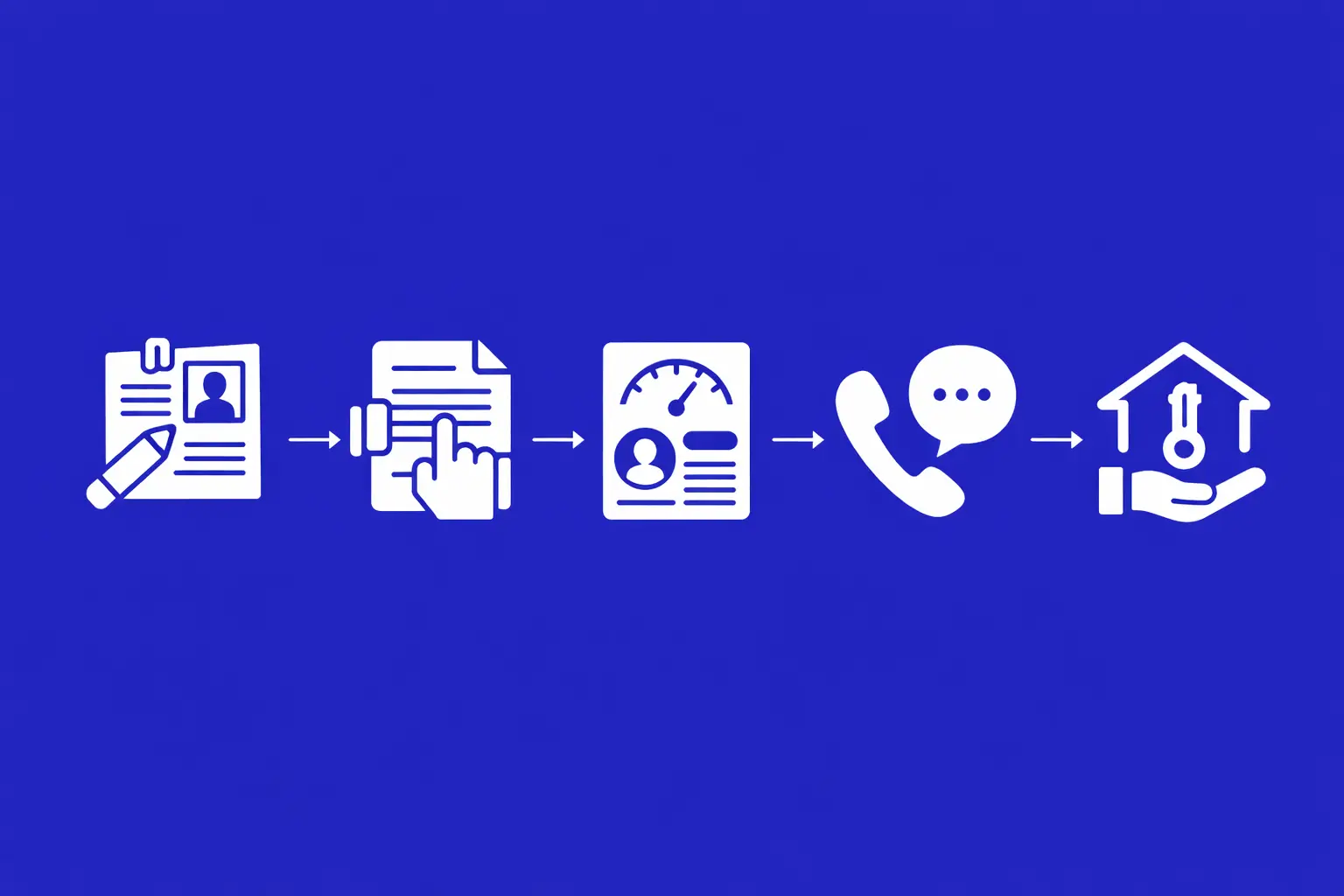
Instead of adding another standalone tool, the focus was on building a unified predictive operational layer that connected existing systems into a single workflow. This began with consolidating all lead sources into one structured pipeline. Whether inquiries came from the website, social media, or direct contact, they were routed into a consistent process from the start.
Once captured, applicant data was entered once and reused throughout the entire workflow. This eliminated the need for repeated data entry and significantly reduced the risk of errors. Information flowed directly into Propertyware and other connected systems without requiring manual duplication.
The application process itself was redesigned to be more structured. Instead of relying on open-ended submissions and back and forth communication, the system guided applicants through required steps, ensuring that necessary documents and information were collected upfront. This reduced delays and improved the overall quality of applications.
Screening and verification processes were also streamlined through integrations. Tasks that previously required manual effort such as credit checks and document handling were incorporated into the workflow, reducing reliance on separate tools and disconnected steps.
Listing management was simplified by linking property intake directly to publishing workflows. Once property details were entered, they could be used to generate listings across platforms, removing the need to recreate the same information multiple times.
Accounting workflows were improved by automating file preparation and reducing manual intervention in payment processing. What previously required hours of effort each week became a significantly lighter task.
Equally important was how the system handled access and security. Sensitive data was managed through controlled access, ensuring that only authorized users could view or process critical information. This replaced fragile manual practices with a more reliable structure.
Rather than forcing users to adapt to a completely new system, the solution was designed to fit within existing workflows. This made adoption significantly easier and reduced resistance from the team.
Implementation
The implementation was carried out in phases to ensure stability and usability. The initial phase focused on the core leasing workflow, including application processing, data handling, and system integration. Once this foundation was in place, additional features such as listing automation and accounting improvements were introduced.
The rollout was aligned with the company’s growth timeline, allowing the system to support new units as they were added rather than reacting after the fact.
Results

The impact of the changes was both immediate and measurable.
Application processing time was significantly reduced, allowing the team to handle the same workload in less time and with fewer errors. Tasks that previously required multiple touchpoints became more streamlined, improving both speed and consistency.
The most important outcome, however, was scalability. The company was able to increase the number of units managed per administrator, effectively expanding capacity without adding headcount.
Financially, this translated into avoided hiring costs estimated at:
- $120,000–$180,000 per year
Operationally, the team gained:
- Better control over workflows
- Improved data accuracy
- Reduced dependency on manual coordination
Key Takeaway
This case highlights a common issue in growing service businesses. As demand increases, the instinct is often to hire more people. But if the underlying workflows remain unchanged, inefficiencies scale with the team.
In this case, the company chose a different path. By restructuring how work moved across systems, they were able to support growth without increasing operational overhead.
The result was not just improved efficiency — it was a more scalable business model.