Your Drivers Hate Your App. That’s a Routing Problem.

ScaleLabs helps ops-heavy B2B teams ship client portals and workflow automation that reduce email chaos, speed up onboarding, and improve visibility across the business.
Ask any fleet dispatcher what their biggest technology frustration is, and it’s not the routing algorithm. It’s the driver app.
Loads don’t show up. Tickets won’t close. Drivers can only see one assignment at a time. And when a load needs to get reassigned mid-shift, the whole thing locks up because the platform wasn’t built to handle changes after dispatch.
So what happens? Drivers avoid the app. They call dispatch. Dispatch calls them back. And the entire system that was supposed to eliminate phone calls becomes another thing to work around.
The One-Load-at-a-Time Problem
Most TMS driver apps were designed around a simple model: dispatch assigns a load, driver accepts it, driver completes it, next load appears. That works fine when your operation is linear and predictable.
But for a fleet doing 250 deliveries a day across mill pickups, site transfers, and customer deliveries with mixed time windows, drivers need to see their full day. They need to know what’s coming after the current load, how their route fits together, and what to expect by end of shift.
When the app only shows one load at a time, the driver is operating blind. They can’t plan ahead. They can’t make smart decisions about timing or sequencing. And they definitely can’t communicate to a customer when they’ll arrive, because they don’t know themselves.
“Drivers don’t hate technology. They hate technology that makes their job harder. When the app creates more work than it eliminates, they’ll find a way around it — and your data goes with it.”
The Reassignment Problem
Here’s where most platforms completely break down. A mill calls at 10am and says they need an extra truck. Tyler in dispatch knows exactly which driver to reassign. But the TMS won’t let him. Once a load is assigned to a driver, it’s stuck. The platform literally cannot reassign it without a cumbersome workaround that takes longer than just calling the driver directly.
So Tyler calls. The driver gets a verbal change. The app still shows the old assignment. The completed load doesn’t push back to the ERP correctly because it was handled outside the system. And now you’ve got a cost tracking gap on that shipment that accounting will spend an hour chasing down next week.
This isn’t a driver adoption problem. It’s a platform design problem. The app was built for a world where plans don’t change. Your world is one where 30 to 40 percent of the workload shifts intraday.
What a Driver App Should Actually Do
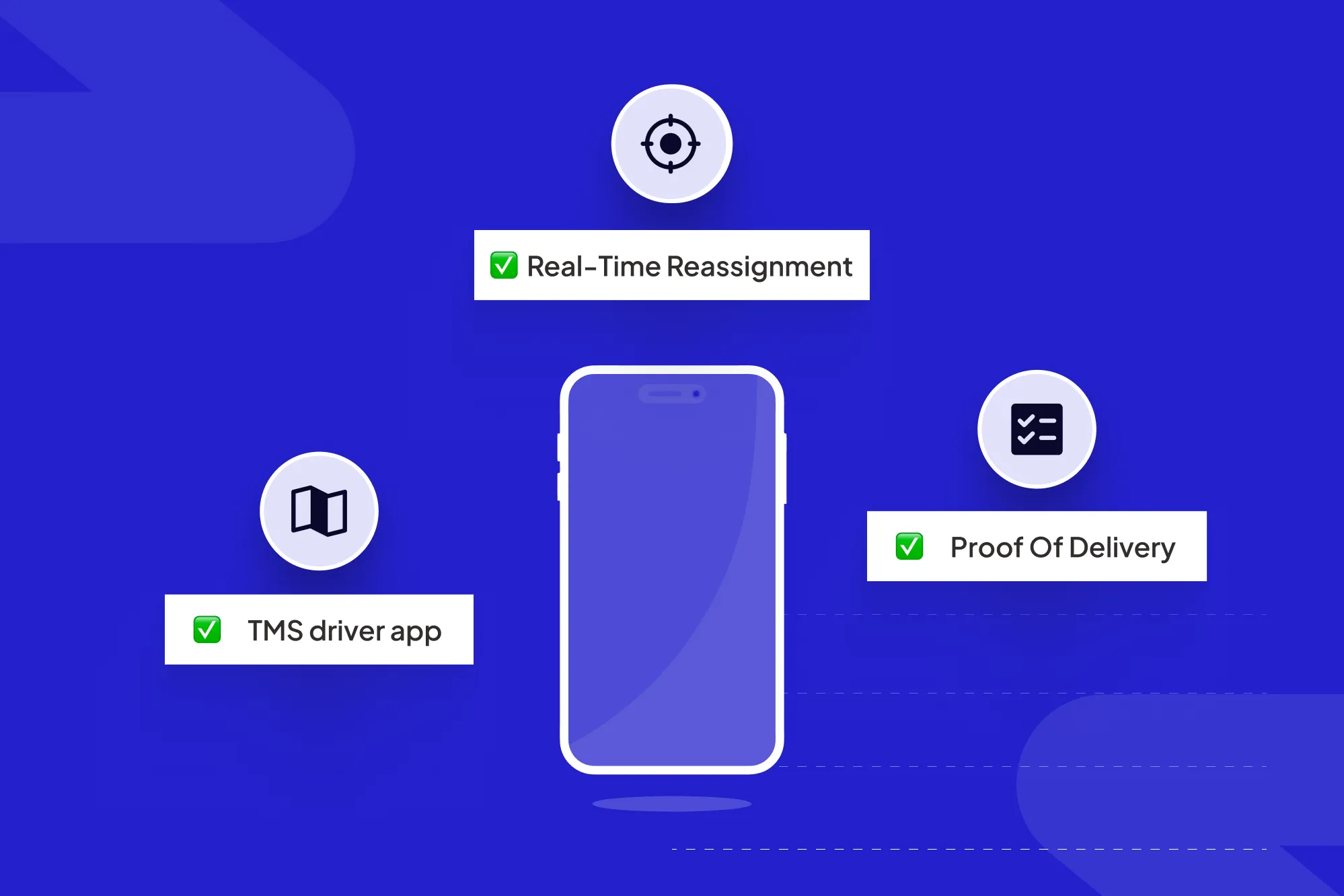
- Show the driver their full shift — every load, in sequence, with pickup and delivery details, time windows, and site instructions. Not one load at a time.
- Allow dispatch to reassign, reorder, or add loads in real time without breaking the driver’s workflow. When the plan changes, the app updates. No calls needed.
- Push completed shipments and proof of delivery back to the ERP automatically. Every load, every time, with the right cost assignment. No manual reconciliation.
- Work on a phone. Not a desktop. Not a specialized device. A phone that every driver already carries.
That’s not a wish list. That’s a minimum viable driver experience for an operation running hundreds of loads a day with intraday volatility.
Stat: Fleets that deployed mobile first driver apps with full day visibility and real time reassignment report 30–50% reductions in dispatch to driver phone calls and measurable improvements in driver satisfaction and retention.
The Downstream Cost of Bad Driver UX
When drivers work around the app, you lose data. And when you lose data, you lose visibility. Dispatch doesn’t know where loads actually stand. Sales can’t tell a customer when their delivery will arrive. Finance can’t reconcile costs to orders. And management is making decisions based on incomplete information.
Every workaround your drivers use because the app is too cumbersome creates a ripple that hits dispatch, sales, finance, and operations. The driver app isn’t a nice-to-have. It’s the front line of your entire data pipeline.
Where to Go From Here
We talk about driver technology and dispatch workflows. If your team is working around the app instead of working with it, that’s a conversation worth having.
Book a call with the ScaleLabs team and tell us about your driver app frustrations. We’ll show you what a purpose-built mobile experience looks like.