Accounting Integration: Why Your Systems Don’t Work Together

ScaleLabs helps ops-heavy B2B teams ship client portals and workflow automation that reduce email chaos, speed up onboarding, and improve visibility across the business.
TL;DR
- Your tools probably sync some data, but finance, sales, and operations still do detective work at month end.
- The root issue usually isn’t one “bad” system, but mismatched processes, data definitions, and integration choices.
- Real accounting system integration starts with defining a financial source of truth, then wiring systems around it.
- The best accounting software for app integration gives you reliable APIs, clear event logs, and permission controls.
- AI powered workflow layers (like those we build at ScaleLabs) keep people, systems, and data in sync as processes run.
Your GL lives in one system, your invoices in another, your project data in a third. Month end rolls around and your team ends up in spreadsheets, hunting down what actually happened in the business. When leaders talk about fixing this, they usually say they need better accounting integration between tools, but the real story is deeper: different teams, timelines, and data definitions stitched together over years. This piece unpacks why your stack feels so messy and what to do about it.
We’ll talk about what “good” looks like, why most integration projects stall out, and how to think about your finance stack as a living workflow instead of a pile of disconnected apps. If you’re a COO, CFO, controller, or head of operations who secretly dreads close week, this is for you.
What do we mean by accounting integration?
“Integrated” gets thrown around in software demos the way “healthy” gets thrown around on cereal boxes. So let’s pin it down.
For a mid market company running on tools like QuickBooks Online, Xero, NetSuite, or Sage Intacct, solid accounting system integration means:
- Operational events (jobs, deliveries, claims, projects) reliably create the right financial records.
- Key fields such as customers, vendors, cost centers, and projects line up across systems.
- Changes in one system flow through in a predictable, auditable way.
- Finance can trace every journal entry back to the operational “moment” that created it.

Strong accounting integration connects your GL, CRM, and operations tools into a single financial picture.
Put differently: your general ledger is the financial reflection of reality, and your integrations keep that reflection honest as work moves through CRMs, field tools, and internal portals.
If you want a formal framing for this, the American Institute of CPAs talks about “system and organization controls” and end to end traceability between operations and financials, not just point to point data syncs. See the AICPA’s resources on systems and controls for more on that angle.
Signs your accounting systems aren’t really integrated
Most teams already have some kind of sync: maybe your CRM pushes customers into your accounting tool; maybe your job system pushes invoices. The question is whether it holds up under real world pressure.

When accounting integration is weak, teams end up in spreadsheet purgatory at month end, reconciling numbers by hand.
Here are classic red flags we see when we talk with operations heavy clients at ScaleLabs:
- Spreadsheet purgatory at month end. Finance exports from three or four tools and manually reconciles the differences.
- Unexplained variances. Revenue shows up in the GL before delivery or completion in your job/project system or never shows up at all.
- Shadow databases. Teams keep their own “truth” in Google Sheets because they don’t trust the shared systems.
- Ticket ping pong. IT and finance trade Jira tickets about “sync issues” that never quite go away.
- Onboarding pain. Setting up a new customer, vendor, or location requires keying the same details into multiple tools.
If three or more of these feel familiar, you don’t just have integration gaps; you have process gaps that integrations happen to expose.
Why your systems don’t work together (even though they “integrate”)
1. Different owners and timelines
Most finance stacks grow in layers. Someone installs an accounting package early on. Years later, operations added a field tool. Then sales adopts a CRM. Each system is picked for a local problem, owned by a different team, and put in place at a different time.
Nobody ever sits down to redraw the whole picture. So your accounting platform is trying to describe the same world as your CRM and project tools but with mismatched assumptions about customers, products, and timing.
2. Incompatible data models
An ERP sees the world in terms of entities like customers, vendors, items, and transactions. Your operations portal might think in terms of jobs, work orders, or claims. When those don’t line up cleanly, developers end up with brittle mapping logic instead of stable semantic links.
If these mappings aren’t designed up front, every integration bug becomes a one off patch instead of a solved problem.
3. No clear financial “source of truth”
In many companies, sales reports one revenue number, operations another, and finance a third. That’s not just annoying; it’s a sign that systems are competing to be the truth instead of feeding one clear ledger.
A healthier pattern: define your GL (or ERP) as the financial source of truth, but treat operational systems as the origin of facts. Jobs, deliveries, and services happen there; integrations translate those into the right financial artifacts in the ledger.
4. Vendor limits and half finished APIs
Even the best accounting software for app integration has quirks. APIs lag behind UI features, rate limits kick in at scale, and webhooks show up for some events but not others. Vendors like QuickBooks Online and NetSuite document these, but most buyers don’t read the fine print until after integration work stalls.
That’s how you end up with one way integrations that import customers but never sync changes, or “batch jobs” that post invoices once a night long after operations needed to see the impact.
Accounting system integration patterns that actually work
Once you see the root causes, the question becomes: what should you aim for instead? In our client work, three patterns show up again and again.
Pattern 1: GL as hub for financial truth
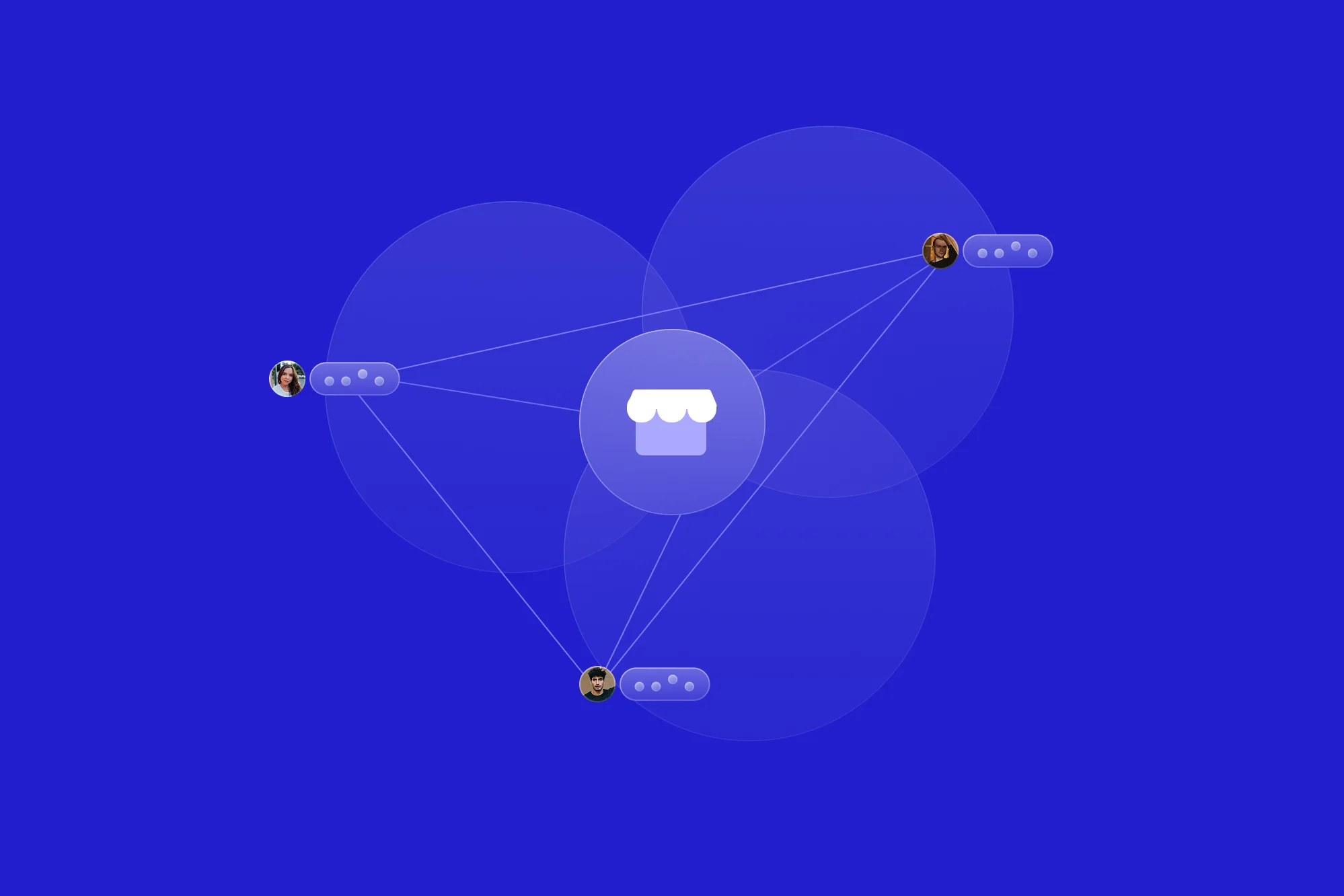
One straightforward model is to treat your accounting or ERP platform as the hub for anything with financial impact, and surround it with spoke systems for operations, sales, and HR.
- Operational systems create “events” (job completed, load delivered, policy bound).
- Integrations turn these into invoices, bills, journal entries, and project movements.
- Only the GL reports official financials; other tools pull summaries from it when needed.
This keeps your P&L and balance sheet clean while still letting each team pick tools that fit their daily work.
Pattern 2: Event driven sync instead of batch exports
Instead of nightly CSV exports, event driven integrations use webhooks or message queues. When something meaningful happens like a job status change or a contract renewal an event fires, and downstream systems react.
For accounting, that means your ledger sees activity close to real time, and finance can catch issues (like mis coded accounts) earlier in the cycle rather than two weeks into close.
Pattern 3: Data warehouse for analytics, systems for transactions
A modern data stack with tools like Snowflake or BigQuery is great for reporting, but it’s a poor substitute for transactional integration. A resilient approach:
- Use direct integrations or workflow apps to keep operational and financial systems consistent.
- Feed a warehouse from those systems for analytics, forecasting, and dashboards.
- Treat the warehouse as read mostly; don’t push data back into core systems from it.
That way, your data team can run serious analysis without turning your GL into someone’s experimental playground.
How to choose the best accounting software for app integration
If you’re already on a modern cloud tool, the question isn’t “Which system has the most logos on its marketplace page?” but “Which one plays nicely with the way we actually work?”
Here are practical questions to ask vendors and implementation partners:
- APIs and webhooks. Is there full API coverage for the records you care about: invoices, bills, projects, custom fields?
- Rate limits and quotas. Will your transaction volume hit caps when you’re busiest?
- Sandbox environments. Can you safely test integrations against a sandbox before touching production?
- Auditability. When an integration posts a journal entry, can you trace who/what triggered it?
- Field level flexibility. Can you add custom dimensions, regions, job types, asset IDs and reference them from other apps?
- Partner ecosystem. Are there reputable implementation partners and middleware tools that already understand this platform?
In other words: the best accounting software for app integration is the one that plays nicely with your process map, not just one with a glossy app directory. A short working session to map your quote to cash or procure to pay flows often reveals what you really need from any accounting platform.
Where AI workflows fit into the picture

AI powered workflow layers can review data, suggest account codes, and route exceptions before they hit your ledger.
Even with strong integrations, real life is messy. People mistype vendor names, pick the wrong GL code, or submit incomplete forms. That’s where an AI powered workflow layer can carry a lot of weight.
At ScaleLabs, we use AI agents and rules to sit between your operational tools and your ledger:
- Checking incoming data for missing or suspicious fields before it hits accounting.
- Suggesting account codes or cost centers based on past behavior and policy.
- Routing exceptions to the right person with all supporting context attached.
- Keeping a clean event log so finance can see how a single job turned into final revenue.
The goal isn’t to replace accountants or controllers; it’s to let them spend less time on “What happened?” and more on “What should we do now?”
How ScaleLabs helps teams fix accounting integration in the real world
Because we focus on operations heavy, “real economy” businesses, utilities, construction, logistics, insurance we see the same movie again and again: email threads everywhere, sprawling spreadsheets, and half finished portals that never quite made it to prime time.
Our typical engagement looks like this:
- Process mapping with operators and finance together. We sit both sides down to map what actually happens today, including the unofficial workarounds.
- System and data inventory. We chart which systems hold which parts of the truth: CRM, job tools, ERP, document storage, and portals.
- Target architecture. We agree on a financial source of truth and define how operational events become financial entries.
- Build the workflow layer. We wire up portals and AI checks that sit on top of your existing systems, rather than ripping everything out.
- Measure real change. We track things like onboarding time, number of reconciliation issues, and email volume around close.
If that sounds like the conversation you wish someone had with you before tools were bought, you can learn more about how we build AI driven workflow applications or simply book a call with us to talk through your stack.
Practical next steps if your systems aren’t working together
You don’t need a year long transformation or a new ERP to make visible progress. Over the next 30–60 days, you could:
- Run a single workshop to map one key flow (for example, quote to cash or claims to collections).
- Write down, in plain language, which system is the financial source of truth for that flow.
- List every manual spreadsheet or email handoff in that process; that’s your first backlog of integration targets.
- Pick one or two small but painful gaps like customer setup or job closure and fix those with better integrations or a lightweight portal.
- Set a simple metric, such as reduction in manual journal entries or time to close the books for that business line.
If you’d like a thought partner who has been through this with other operations heavy teams, we’re always happy to walk through your current systems and sketch what a saner accounting integration story could look like. You can start that conversation by booking a call with ScaleLabs.